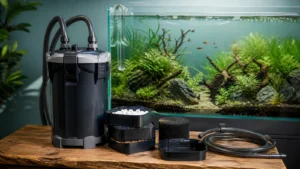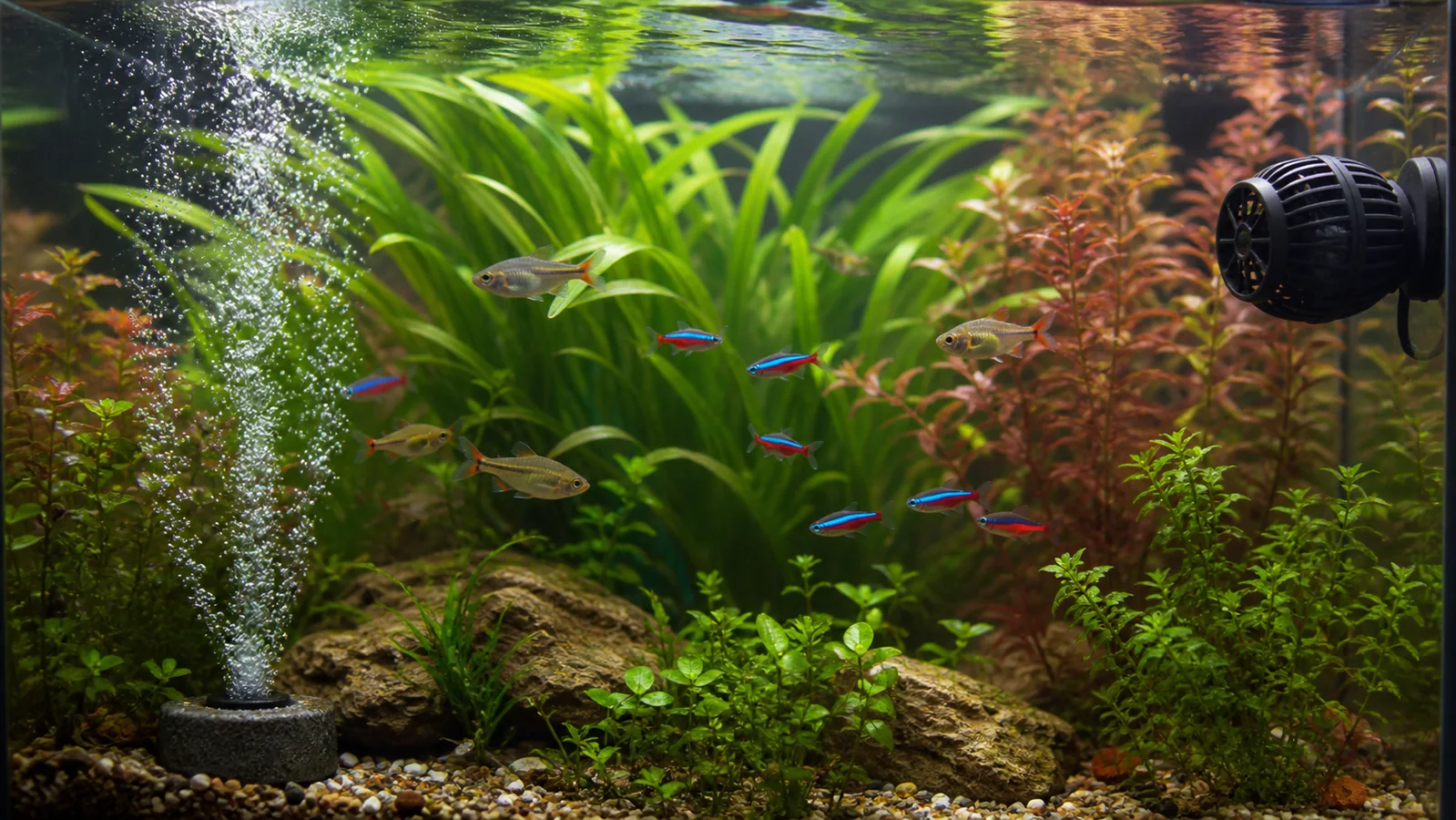
An air pump moves air through tubing to an airstone or air-driven filter. A powerhead moves aquarium water directly. Both can improve circulation, but they solve different layout problems and neither automatically replaces biological filtration.
Side-by-side
| Device | Main job | Good use | Watch for |
|---|---|---|---|
| Air pump | Drives bubbles or sponge filter | Surface agitation, backup aeration, fry tanks | Noise, back-siphon; use a check valve |
| Powerhead | Moves water | Dead spots, reef circulation, under-filter flow | Strong jets and unsafe intakes |
Choose by the problem
For low surface movement or an air-driven sponge filter, choose an air pump. For debris settling behind hardscape or a reef that needs broad circulation, a guarded, controllable powerhead may fit. For power outages, battery backup or battery air equipment requires a separate emergency plan.
Placement checklist
- Observe the surface and areas behind decor.
- Protect intakes for small fish, shrimp and snails.
- Avoid blasting fish continuously.
- Install an air-line check valve above or as directed relative to water level.
- Clean airstones and guards before flow collapses.
Related PetUpon guides
Compare aquarium air pumps and powerheads.
Diagnose oxygen and circulation separately
Warm water holds less dissolved oxygen, while higher stocking, medication, bacterial blooms and nighttime plant respiration can increase demand. Fish gathering at the surface is an urgent warning, not a normal way to choose equipment. Immediately check temperature, filter operation and water quality, increase safe surface movement and investigate the cause.
Circulation problems are more often revealed by debris settling in the same area, surface film, temperature differences or zones where plants collect detritus. A broad, gentle flow pattern is usually more useful than a narrow high-speed jet.
Size an air pump
Check the pump’s rated depth and number of outlets, because deeper water adds back pressure. Airflow valves can balance branches, but restricting every outlet may strain some pumps; follow the manual or bleed unused flow safely if specified. Place the pump above the water line or install a correctly oriented check valve to reduce back-siphon risk during outages.
Size and position a powerhead
Choose controllable flow and a protected intake. Aim along a pane or across the surface to diffuse velocity, then watch how fish swim at rest. Reef tanks often need alternating or broad flow rather than one constant blast. Freshwater plants should sway gently, not remain flattened. Recheck placement after hardscape or plant growth changes.
Emergency preparation
- Keep a tested battery air pump or suitable backup for outages.
- Label check-valve direction and inspect tubing for cracks.
- Clean powerhead guards so reduced flow does not go unnoticed.
- Never handle submerged electrical equipment while it remains connected.
How to verify that the change is working
Change one variable at a time and record the starting condition before adjusting equipment or routine. Note water-test results, temperature, livestock behavior, feeding, visible waste or algae, and the exact setting that changed. Recheck at a consistent time rather than reacting to a single observation immediately after maintenance. This creates evidence you can compare and prevents repeated changes from hiding the real cause.
Animal behavior is an important signal but not a substitute for measurements. Normal swimming, breathing and feeding should be considered alongside ammonia, nitrite, temperature and species-specific chemistry. If animals gasp, lose balance, develop lesions or die unexpectedly, treat it as a health or water-quality problem—not an equipment shopping problem—and seek qualified help.
Responsible equipment decisions
Buy for the mature aquarium, not only its current appearance. Confirm electrical certification, warranty, replacement parts, cleaning access and the manufacturer’s operating limits. Keep manuals and purchase dates in the maintenance log. Before replacing working equipment, identify the outcome you need and the measurement that will show improvement. A more expensive device cannot correct overcrowding, incompatible livestock, untreated source water or inconsistent husbandry.
After any installation, inspect cables, drip loops, leaks, unusual heat, vibration and restart behavior. Keep electrical connections dry and disconnect power before putting hands near damaged or exposed equipment. When the manufacturer’s instructions conflict with a general rule in this guide, follow the instructions for the exact model.
Frequently asked questions
Do bubbles add oxygen?
They promote gas exchange by moving water and disturbing the surface; surface movement is the key effect.
Can a powerhead replace a filter?
Not by itself. It moves water but does not necessarily provide mechanical and biological media.
Do planted tanks need an air pump?
Not always. The answer depends on surface exchange, stocking, nighttime oxygen, temperature and filter circulation.
Sources and editorial notes
- Aqueon: Freshwater Aquarium Water Quality
- Aqueon: The Nitrogen Cycle
- Fluval: Choosing a Freshwater Filter
PetUpon provides general aquarium education. Species needs and equipment instructions take priority; seek an aquatic veterinarian for illness or unexplained losses.