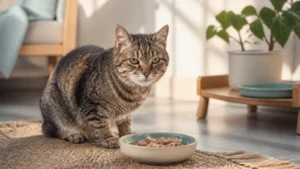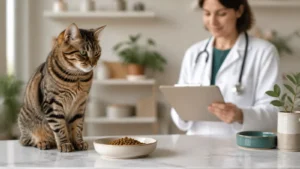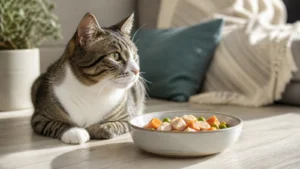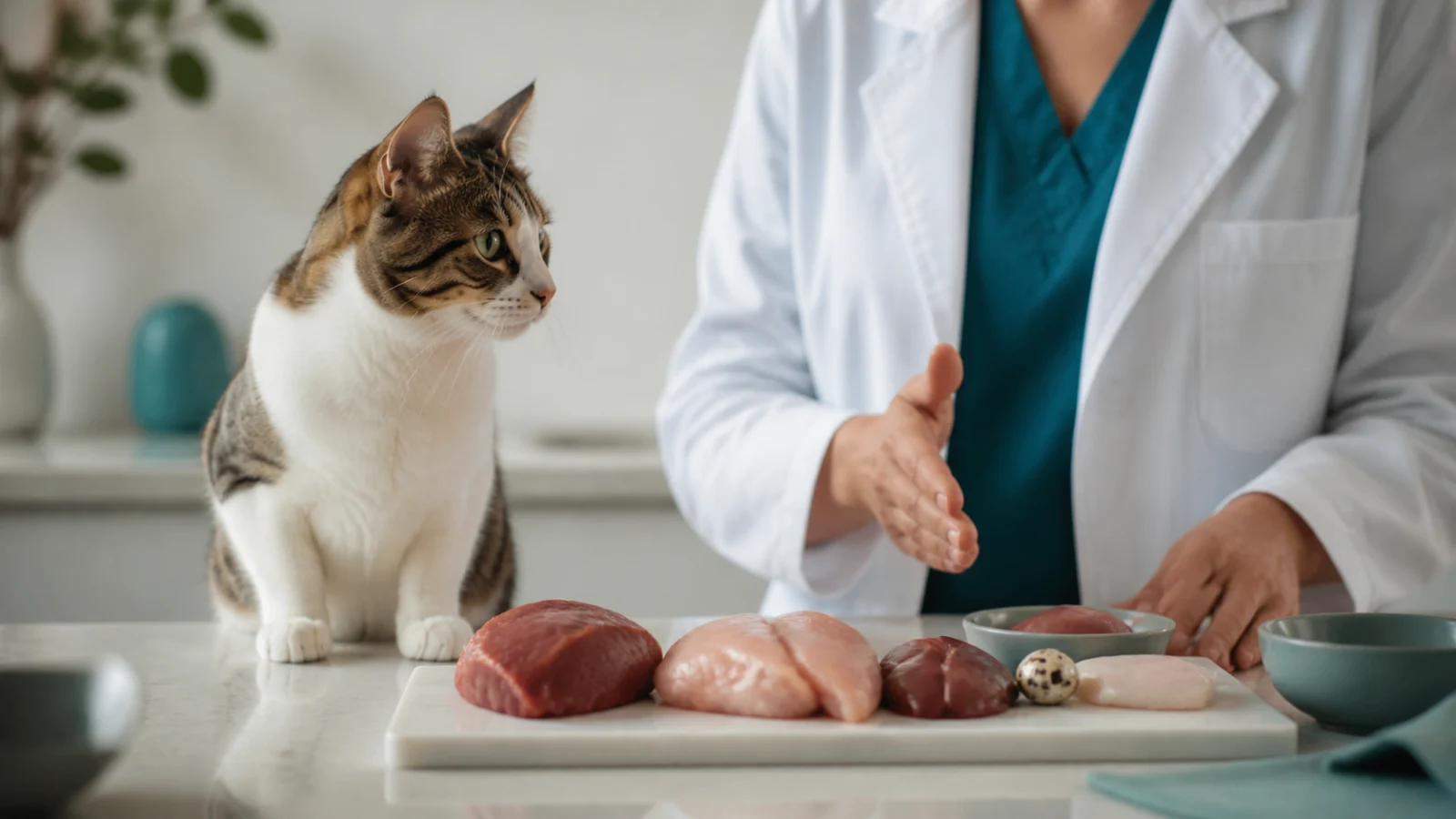
Raw cat food is not proven to be safer or nutritionally superior simply because it is uncooked. CDC does not recommend raw pet food: raw meat, organs, eggs, unpasteurized milk, bones, freeze-dried raw products, and raw toppers can carry pathogens such as Salmonella and Listeria that can infect cats and spread through the household.
Raw-food risk overview
| Risk | What owners often miss |
|---|---|
| Bacterial contamination | Freezing, freeze-drying, dehydration, and high-pressure methods do not guarantee sterility |
| Household spread | Bowls, floors, paws, fur, saliva, countertops, sinks, and litter can move pathogens |
| Nutrient imbalance | Meat/bone/organ ratios do not automatically meet feline requirements |
| Bone injury | Raw bones can fracture teeth, choke, obstruct, or perforate |
| Cross-contamination | Human food and kitchen items can be exposed during preparation |
| False reassurance | A cat can appear normal while shedding organisms |
What FDA testing found
In an FDA Center for Veterinary Medicine study of 196 commercially available raw dog and cat food samples, 15 tested positive for Salmonella and 32 for Listeria monocytogenes. The study does not mean every package is contaminated, but it demonstrates a meaningful hazard and why absence of smell or visible spoilage is not proof of safety.
Nutritional adequacy
A raw product used as the sole diet should carry an appropriate complete-and-balanced nutritional adequacy statement for the cat’s life stage. Products labeled as treats, toppers, complementary, intermittent, or supplemental feeding cannot replace a complete diet. Homemade raw food needs formulation by a board-certified veterinary nutritionist or equivalent; see our homemade cat-food safety guide.
Why bones are not a dental plan
Bones can break teeth and cause choking or gastrointestinal injury. They do not replace tooth brushing, oral examinations, dental radiographs, or professional treatment. A cat with bad breath, drooling, dropping food, oral bleeding, or reduced appetite needs a veterinary dental exam.
If you currently feed raw
The lowest-risk recommendation is to transition to a complete cooked commercial food or a professionally formulated cooked diet with veterinary guidance. If an owner chooses to continue despite the risk:
- Discuss household and pet risk with the veterinarian.
- Choose a complete product from a company that tests final lots for pathogens and explains its kill step and quality controls.
- Keep raw food sealed and separate from human food; thaw in the refrigerator.
- Do not rinse raw meat, which can splash contamination.
- Wash hands and clean then disinfect every contact surface and utensil.
- Discard leftovers safely and prevent access by other animals.
- Do not allow face licking immediately after meals; manage litter hygiene.
These steps reduce but do not eliminate risk.
When to contact a veterinarian
Seek care for vomiting, diarrhea, blood, fever, reduced appetite, lethargy, abdominal pain, dehydration, neurologic change, or suspected bone/foreign-body ingestion. Tell the clinic that the cat eats raw so staff can consider exposure and infection-control precautions. Human household members with symptoms should contact a healthcare provider and disclose raw-pet-food exposure.
Common claims
“Cats naturally eat raw prey”
Domestic household feeding differs from wild prey ecology, and “natural” does not establish nutritional completeness or pathogen safety.
“Freezing kills bacteria and parasites”
Freezing may reduce some organisms but does not reliably eliminate all pathogens. CDC still classifies frozen and freeze-dried products as raw.
“Raw cures allergies or digestive disease”
Raw is not a diagnostic category. Food reactions and chronic GI disease need veterinary workup and often controlled hydrolyzed/novel-protein trials.
“My cat has eaten it for years”
Past tolerance does not guarantee future lot safety, nutritional adequacy, or absence of household shedding.
Frequently asked questions
Is commercial raw safer than homemade?
It may have better formulation and controls, but it remains raw and not risk-free. Ask for final-product pathogen testing and full nutritional adequacy.
Is freeze-dried raw safe?
CDC treats freeze-dried raw as raw; the process does not necessarily kill all germs.
Can kittens eat raw?
Young animals are more vulnerable, and growth nutrition must be precise. A complete cooked kitten diet is the safer choice.
Can I mix raw with kibble?
Mixing does not neutralize pathogens and can contaminate the entire bowl and environment.
Bottom line
Raw feeding adds pathogen, household, bone, and nutritional risks without guaranteed health benefit. Choose a complete cooked diet and involve the veterinary team, especially for kittens, medical conditions, or vulnerable household members.
Sources
- CDC: pet food safety and raw-food recommendation
- FDA: raw pet food study and safety
- FDA: safe handling of pet food and treats