Good aquarium maintenance preserves stability rather than making the tank look newly scrubbed. Observe livestock every day, use water tests to set the water-change interval, remove waste before it accumulates and protect the beneficial microbes living mainly on filter media and surfaces.
Maintenance rhythm
| Frequency | Tasks |
|---|---|
| Daily | Count animals, check behavior, temperature, leaks, flow and uneaten food |
| Weekly or test-led | Test water, partial water change, siphon accessible debris, clean viewing glass |
| Monthly/when flow falls | Inspect intake, impeller, hoses and media; trim plants; test safety equipment |
Partial water-change steps
- Test and record water before changing it.
- Unplug heaters and equipment affected by a lower water line.
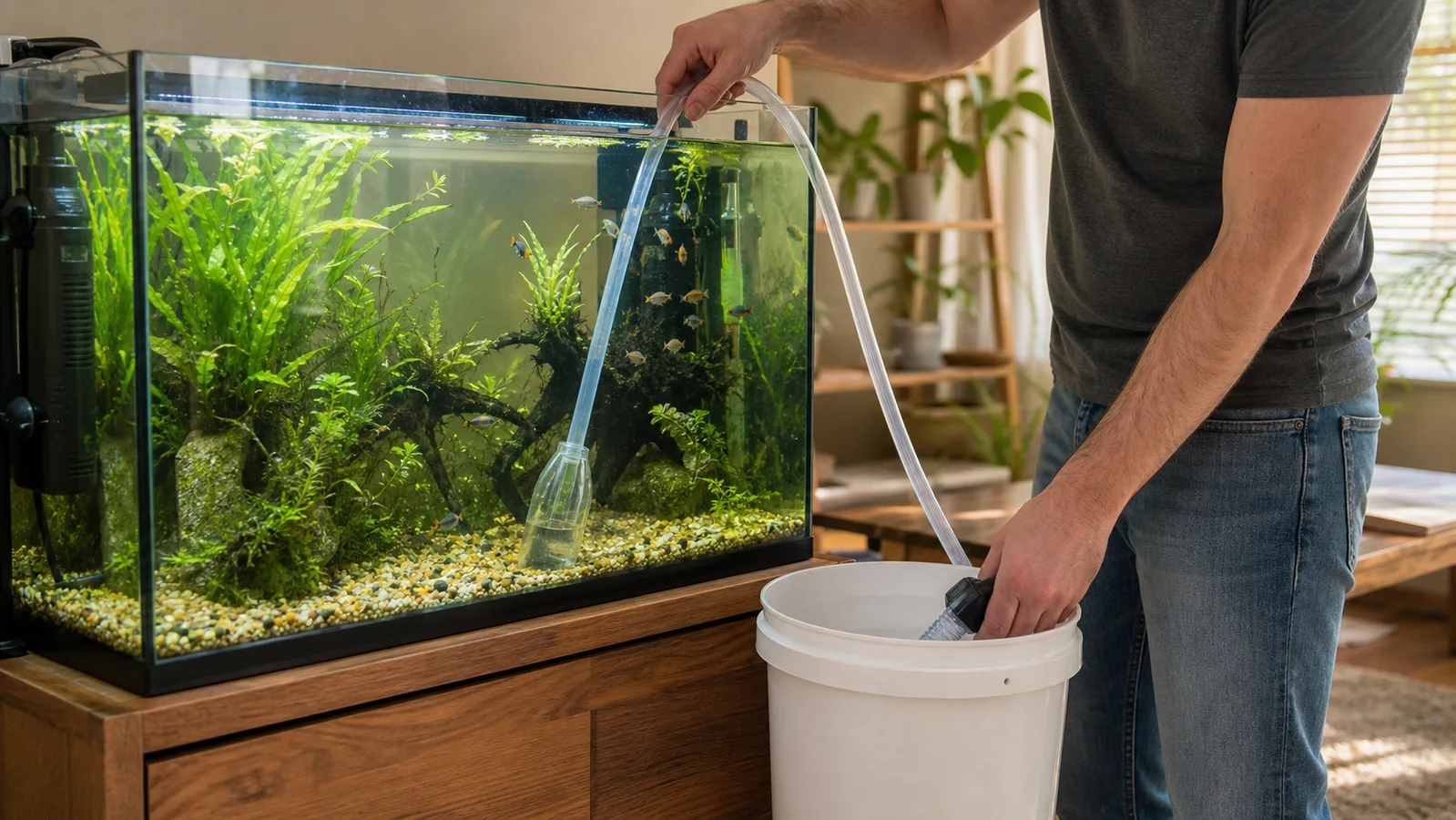
- Siphon a planned portion while removing debris.
- Treat replacement tap water with conditioner and match temperature appropriately.
- Refill gently, restore equipment safely and verify flow and temperature.
- Retest when results or animal behavior warrant it.
Filter care without crashing the cycle
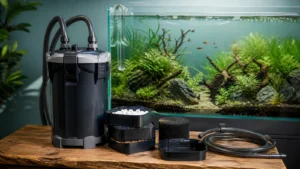
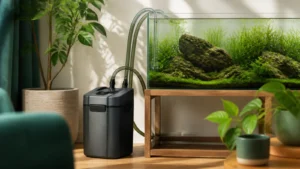
Rinse reusable biological media gently in removed aquarium water or conditioned water, following the filter maker’s guidance. Do not rinse mature biological media under untreated chlorinated tap water, and do not replace all media merely because a cartridge schedule says so. Replace exhausted chemical media as appropriate while preserving biological capacity.
Related PetUpon guides
Aquarium filter guide, heater guide, and new-tank cycling guide.
Let measurements set the schedule
Test more frequently in new, heavily stocked or recently changed aquariums. Ammonia and nitrite should remain undetectable in a cycled freshwater system; any reading calls for immediate investigation. Nitrate targets depend on livestock and system, but a rising trend helps determine water-change frequency. Also track pH and any species-critical hardness or salinity measurement with appropriate tools.
A 20-minute weekly workflow
- Observe and test before disturbing the aquarium.
- Prepare conditioner, temperature-matched replacement water and dedicated tools.
- Unplug equipment that cannot remain safely exposed.
- Clean only the accessible glass and siphon debris-rich areas.
- Perform the planned partial change without exposing animals to sudden chemistry shifts.
- Service mechanical media only if dirty or flow has fallen.
- Refill, restart, inspect for leaks and record results.
Tasks to stagger
Do not combine a major filter service, deep substrate disturbance, large plant removal and full livestock addition. Spread them across separate maintenance sessions so biological capacity and animal behavior can be observed. If two filters are used, service them on different dates. Keep spare conditioned water, an air pump and essential replacement parts ready for failures.
Monthly equipment audit
| Equipment | Check |
|---|---|
| Filter | Flow, impeller, seals, hoses and intake guard |
| Heater | Independent temperature, damage and mounting |
| Lighting | Timer, ventilation, splash and cable condition |
| Air/flow | Tubing, check valve, airstone and guards |
| Test kits | Expiry, clean vials and reagent instructions |
How to verify that the change is working
Change one variable at a time and record the starting condition before adjusting equipment or routine. Note water-test results, temperature, livestock behavior, feeding, visible waste or algae, and the exact setting that changed. Recheck at a consistent time rather than reacting to a single observation immediately after maintenance. This creates evidence you can compare and prevents repeated changes from hiding the real cause.
Animal behavior is an important signal but not a substitute for measurements. Normal swimming, breathing and feeding should be considered alongside ammonia, nitrite, temperature and species-specific chemistry. If animals gasp, lose balance, develop lesions or die unexpectedly, treat it as a health or water-quality problem—not an equipment shopping problem—and seek qualified help.
Responsible equipment decisions
Buy for the mature aquarium, not only its current appearance. Confirm electrical certification, warranty, replacement parts, cleaning access and the manufacturer’s operating limits. Keep manuals and purchase dates in the maintenance log. Before replacing working equipment, identify the outcome you need and the measurement that will show improvement. A more expensive device cannot correct overcrowding, incompatible livestock, untreated source water or inconsistent husbandry.
After any installation, inspect cables, drip loops, leaks, unusual heat, vibration and restart behavior. Keep electrical connections dry and disconnect power before putting hands near damaged or exposed equipment. When the manufacturer’s instructions conflict with a general rule in this guide, follow the instructions for the exact model.
Frequently asked questions
How often should I change aquarium water?
Use testing, stocking and feeding to set the interval. Regular partial changes are safer than waiting for visible dirt.
Should I replace every filter cartridge monthly?
Preserve mature biological media. Replace only media that is exhausted or damaged and follow the filter design without removing all biofiltration at once.
Can I clean the tank with soap?
No. Household soap residues can harm aquatic life. Use aquarium-dedicated tools and methods.
Sources and editorial notes
- Aqueon: Freshwater Aquarium Water Quality
- Aqueon: The Nitrogen Cycle
- Fluval: Choosing a Freshwater Filter
PetUpon provides general aquarium education. Species needs and equipment instructions take priority; seek an aquatic veterinarian for illness or unexplained losses.