Cycling establishes microbes that convert toxic ammonia to nitrite and then to nitrate. A new tank may look clear while still being biologically immature, so time alone cannot confirm it is ready. A fishless cycle avoids intentionally exposing fish to ammonia and nitrite.
The cycle in plain language
| Stage | What you may measure | Meaning |
|---|---|---|
| Early | Ammonia rises | Waste-processing community is not established |
| Middle | Nitrite appears | First conversion is developing |
| Later | Nitrate appears; ammonia/nitrite fall | Both conversion steps are developing |
Fishless cycling steps
- Set up tank, filter and heater if the future species requires one.
- Treat tap water with conditioner before it reaches biological media.
- Add an aquarium-safe ammonia source according to its label.
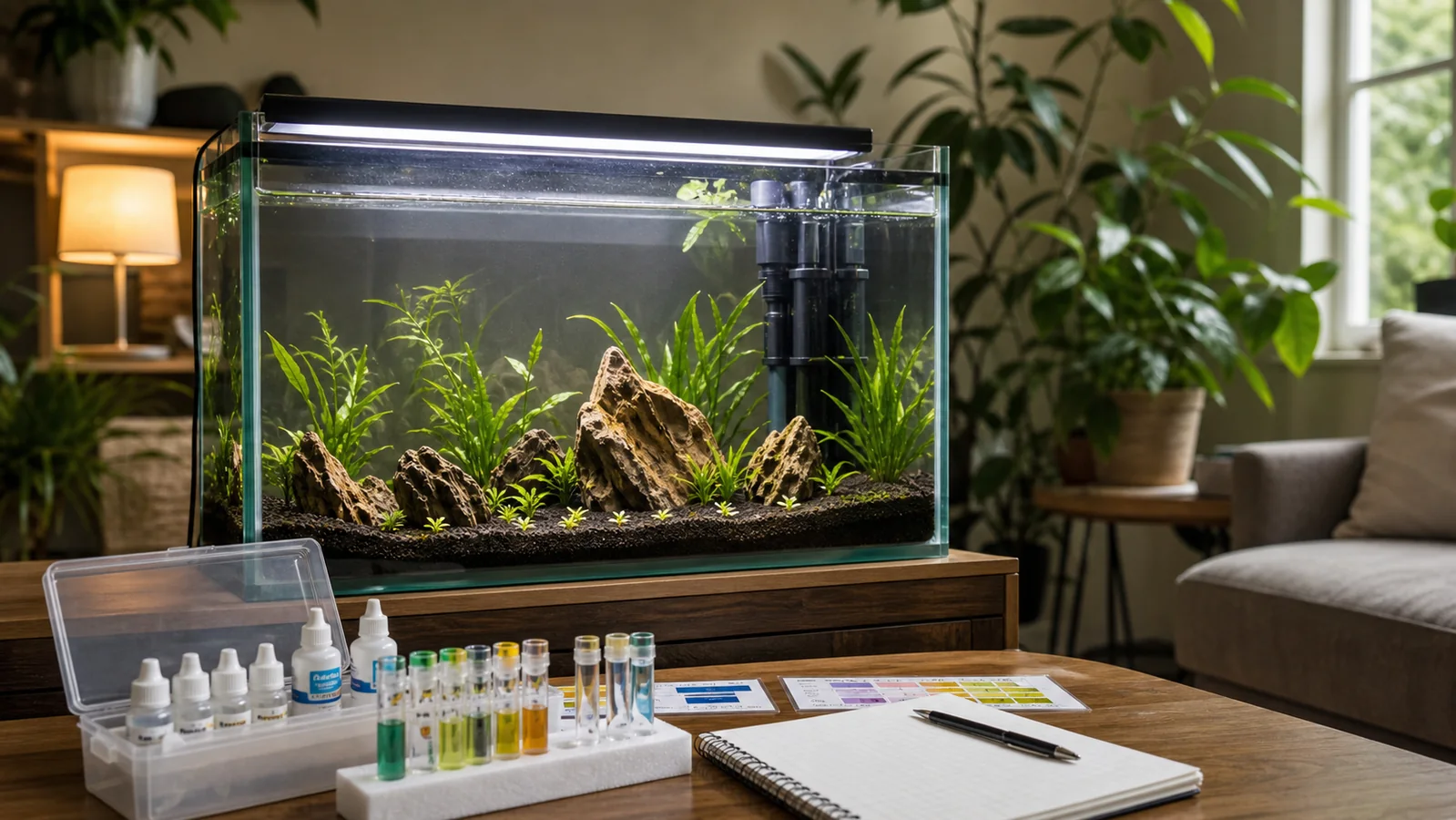
- Test ammonia, nitrite and nitrate consistently and log results.
- Keep the filter running continuously and do not deep-clean media.
- Confirm the system repeatedly processes the intended ammonia input to zero ammonia and zero nitrite before stocking.
- Add livestock gradually and keep testing.
Common setbacks
Untreated chlorine/chloramine, replacing media, a stopped filter, unsuitable temperature or pH, and adding too much ammonia can delay the process. Bottled bacteria may help seed a tank but do not replace testing.
Related PetUpon guides
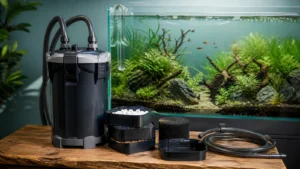
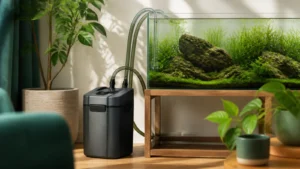
Choose a filter with adequate biological media and see the maintenance checklist.
What to record during a fishless cycle
Use the same test method and similar time of day so the trend is meaningful. Record the date, ammonia, nitrite, nitrate, pH, temperature and any dose or water change. The exact nitrate reading can be influenced by tap water and plants, so the most important readiness evidence is that the planned ammonia input is repeatedly processed while ammonia and nitrite return to zero.
Liquid reagents expire and require exact shaking, timing and sample volume. Test strips can be convenient but may not cover ammonia. Follow the kit rather than interpreting colors in dim or strongly tinted room light.
Using seeded media responsibly
Established biological media can shorten cycling when it comes from a healthy, compatible aquarium. Keep it wet in aquarium water, move it promptly and place it where oxygenated water flows through it. Never borrow media from a tank with unexplained disease, parasites or recent medication. Bottled bacteria should be stored and dosed as the label directs; treat it as an inoculant, not permission to skip testing.
Stocking after the cycle
Add only a modest first group that is compatible with the tank’s mature size and social needs. Feed conservatively, test after stocking and wait for stable readings before the next addition. Quarantine new animals when possible. A filter’s microbial population grows in response to waste; adding the full planned population at once can overwhelm a newly established system.
Stop and troubleshoot when
- pH drops sharply or the test result contradicts previous readings.
- The filter stops, media dries or untreated tap water contacts it.
- Ammonia remains very high after an accidental overdose.
- A strong odor, film or cloudy bloom appears with no improving trend.
How to verify that the change is working
Change one variable at a time and record the starting condition before adjusting equipment or routine. Note water-test results, temperature, livestock behavior, feeding, visible waste or algae, and the exact setting that changed. Recheck at a consistent time rather than reacting to a single observation immediately after maintenance. This creates evidence you can compare and prevents repeated changes from hiding the real cause.
Animal behavior is an important signal but not a substitute for measurements. Normal swimming, breathing and feeding should be considered alongside ammonia, nitrite, temperature and species-specific chemistry. If animals gasp, lose balance, develop lesions or die unexpectedly, treat it as a health or water-quality problem—not an equipment shopping problem—and seek qualified help.
Responsible equipment decisions
Buy for the mature aquarium, not only its current appearance. Confirm electrical certification, warranty, replacement parts, cleaning access and the manufacturer’s operating limits. Keep manuals and purchase dates in the maintenance log. Before replacing working equipment, identify the outcome you need and the measurement that will show improvement. A more expensive device cannot correct overcrowding, incompatible livestock, untreated source water or inconsistent husbandry.
After any installation, inspect cables, drip loops, leaks, unusual heat, vibration and restart behavior. Keep electrical connections dry and disconnect power before putting hands near damaged or exposed equipment. When the manufacturer’s instructions conflict with a general rule in this guide, follow the instructions for the exact model.
Frequently asked questions
How many days does cycling take?
There is no guaranteed number. Water chemistry, temperature, inoculation and method vary; test results determine readiness.
Can I cycle with fish?
A fishless method is the welfare-first choice. If fish are already present, test frequently and get species-appropriate help to prevent toxic exposure.
Does clear water mean cycled water?
No. Clarity does not show ammonia or nitrite; only appropriate testing can confirm those values.
Sources and editorial notes
- Aqueon: Freshwater Aquarium Water Quality
- Aqueon: The Nitrogen Cycle
- Fluval: Choosing a Freshwater Filter
PetUpon provides general aquarium education. Species needs and equipment instructions take priority; seek an aquatic veterinarian for illness or unexplained losses.