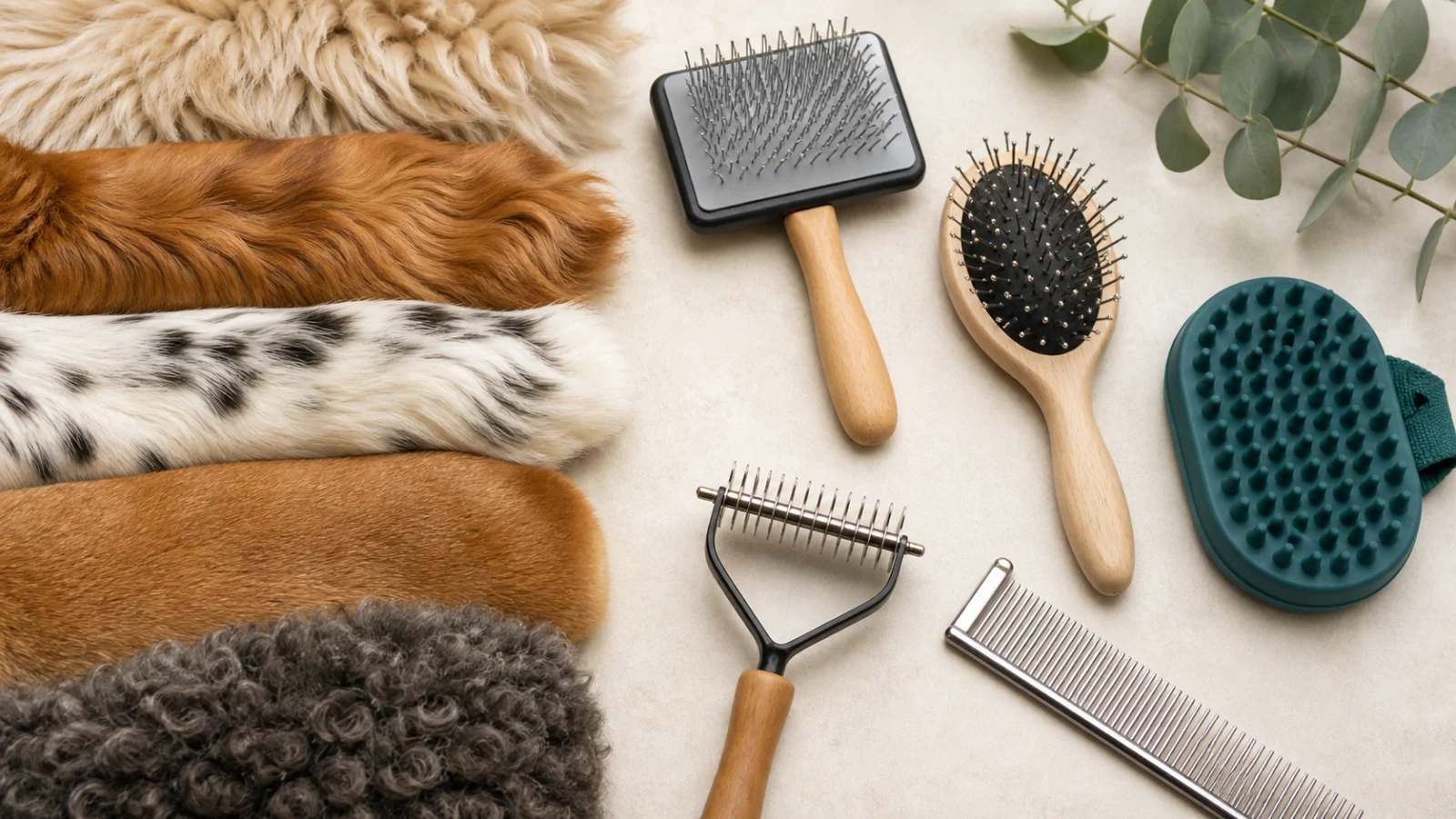
The best dog brush is the one that performs a defined job on a specific coat without scratching skin or breaking healthy hair. A slicker, pin brush, rubber curry, undercoat rake and metal comb are not interchangeable. Many dogs need two tools: one to loosen debris or undercoat and another to verify that the coat is tangle-free down to the skin.
Brush comparison
| Tool | Typical job | Common coat match | Main caution |
|---|---|---|---|
| Rubber curry/mitt | Lifts loose hair and massages | Smooth, short coats | Do not rub irritated skin |
| Bristle brush | Finishes surface and distributes oils | Short to medium coats | May not reach dense undercoat |
| Pin brush | Works through longer coat with less surface scraping | Long, silky or flowing coats | Must still check with a comb |
| Slicker brush | Separates coat, removes loose hair and small tangles | Curly, long and many double coats | Too much pressure can scratch |
| Undercoat rake | Removes loose undercoat | Dense double coats | Wrong tooth length can drag skin |
| Metal comb | Checks work down to skin | Most medium, long and curly coats | Never force through a mat |
Smooth coats
Begin with a rubber curry or grooming mitt using gentle strokes in the direction of growth. A soft bristle brush can finish the surface. Because short hair offers little padding, aggressive metal teeth can irritate skin even when little hair is removed.
Double coats
A slicker or appropriately sized undercoat rake can lift loose undercoat, but the tool must reach the coat—not rake the skin. Work in short sections and stop if skin reddens or the dog repeatedly flinches. During shedding season, increase frequency rather than pressure.
Long and silky coats
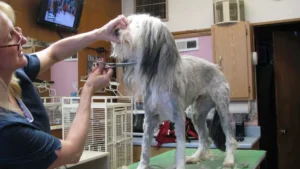
Use a pin brush while supporting the section near the skin, then verify with a metal comb. Pay special attention behind ears, under collars, armpits and feathering. Spraying or conditioning should follow coat-specific professional advice; wetting an established mat can make it tighter.
Curly coats
Curly coats can mat close to skin while appearing fluffy. Line brushing—lifting a narrow section, brushing from the accessible base outward, and progressing systematically—helps avoid skimming only the surface. A comb is the final check before a guide comb or clipper is used.
How to test pressure
- Run the tool over the inside of your forearm using the pressure you plan to apply.
- Start on the dog’s shoulder, not a sensitive area.
- Use several short strokes instead of repeatedly scraping one spot.
- Part the coat and inspect skin during the session.
- Clean collected hair from the tool so teeth continue to work predictably.
When a brush should not be used
Do not brush over wounds, moist sores, unexplained swelling or painful skin. Do not attempt to pull out a tight mat attached close to skin. Extensive matting changes skin position and can make home cutting dangerous. See our safety guide for matted coats.
For purchase criteria, tooth shape and coat matching, see the dog shedding-brush buying guide. Then build frequency around the grooming schedule by coat type.
Sources
Frequently asked questions
Is a slicker brush suitable for every dog?
No. It is useful for many dense, curly and longer coats, but smooth coats may do better with a rubber or soft bristle tool. Pressure and pin design also matter.
Do deshedding tools cut healthy hair?
Designs vary. Choose a tool for the exact coat, use light pressure and stop if it drags, scratches or removes coat unevenly.
Why use a comb after brushing?
A brush can skim the surface. A metal comb helps reveal tangles or compacted coat closer to skin before bathing or clipping.