A dog does not need to endure fear to “get used to” clippers. Sight, motor sound, vibration, handling and standing on a grooming surface are separate skills. Training them in small pieces gives the dog a chance to predict what happens and lets the handler stop before stress escalates.
Read the starting point
Begin where the dog can notice the tool and still take food, respond to a familiar cue and move normally. Stress can appear as leaning away, freezing, repeated lip licking, panting unrelated to heat, paw lifting, whale eye, escape attempts, growling or refusing a normally valued reward. One sign alone needs context, but a pattern means the step is too difficult.
A six-stage introduction
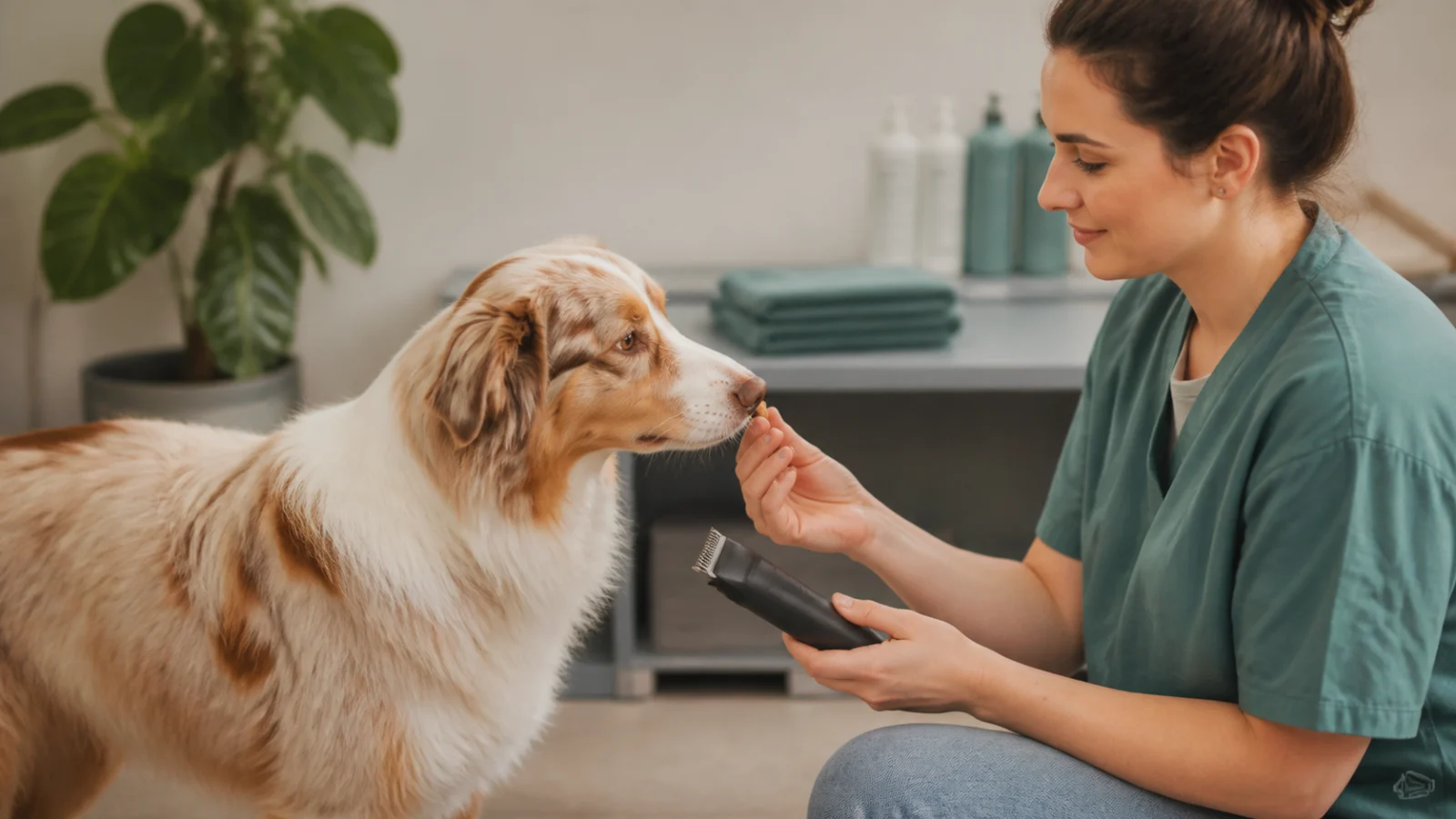
- Tool at rest: place the unplugged clipper several feet away. Reward looking toward it and returning attention to you.
- Tool in hand: pick it up briefly without approaching the dog. Put it down before concern appears.
- Handling practice: without the clipper, touch shoulder, back and legs for one second, then reward. Do not begin with face, feet or tail.
- Sound at distance: switch the clipper on across the room for a second, reward, and switch it off. Increase duration before decreasing distance.
- Vibration through a safe object: with the blade guarded and tool kept away from skin, let the dog experience faint vibration indirectly only if calm.
- One easy pass: on a prepared coat and broad body area, make a brief safe pass, reward and finish the session.
Change one variable at a time
If you make the sound louder, do not also move closer and add handling. If you touch a new body area, keep the tool off. This makes it clear which element caused concern and prevents accidental flooding. Several thirty-second successes can be more valuable than one ten-minute struggle.
Use rewards as information
A reward should create a positive association, not lure a worried dog into contact it would avoid. Present the sound or handling at a tolerable level, then deliver the reward. If the dog stops eating, grabs frantically or cannot disengage from the tool, increase distance and simplify the step.
Prepare the environment
- Use a stable nonslip mat at floor level for early sessions.
- Prevent other pets and children from interrupting.
- Have the coat clean, dry and combed before any real clipping.
- Use a quiet, maintained clipper with a cool blade.
- Plan a stop point before beginning.
When the dog is ready for grooming
Readiness means the dog can remain loose-bodied around the switched-on tool, accept gentle handling in the intended area and recover quickly after each short repetition. It does not mean every body area is ready. Face, feet, armpits and sanitary areas may need separate training or professional handling.
Choose equipment only after evaluating noise, vibration, blade system and coat type in our dog clipper buying guide. For an established routine, use the grooming schedule by coat type.
Sources
- AKC: Husbandry Training for Grooming
- AKC: Handling Exercises and Body Sensitivity
- AKC Professional Dog Grooming Educational Standards
Frequently asked questions
How long should each training session be?
Short enough that the dog remains comfortable—sometimes only seconds at first. End after a successful repetition rather than waiting for visible fear.
Should I hold the dog still until it stops struggling?
No. Forced exposure can increase fear and create bite risk. Reduce intensity and teach voluntary participation in smaller steps.
What if the dog was previously frightened by clippers?
Return to a level where the dog can stay relaxed, often with the clipper off and far away. Significant fear or aggression warrants professional help.