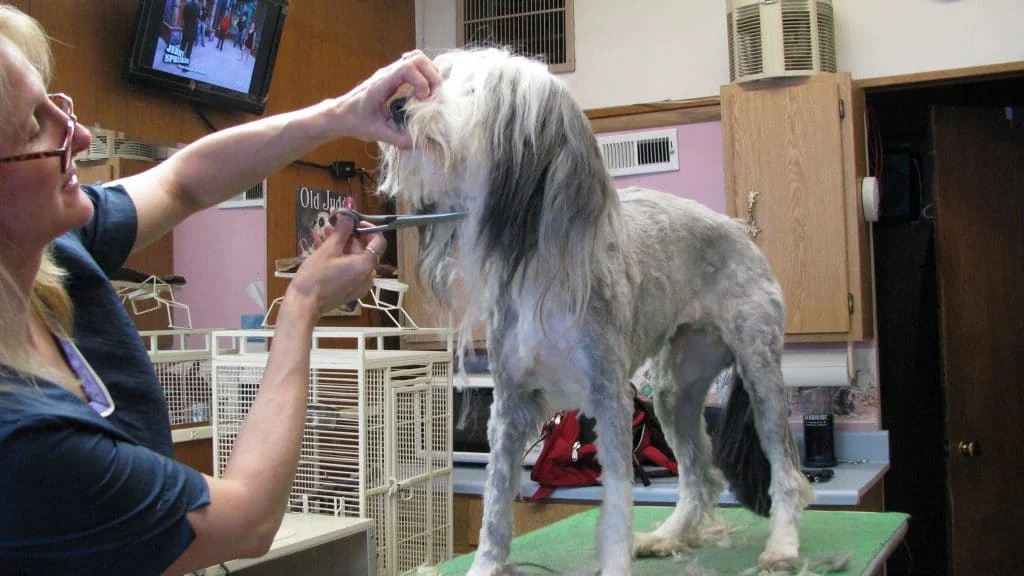
The best dog grooming shears are not a single “top-rated” pair. The right tool depends on the cut: straight shears create clean lines, curved shears shape rounded areas, thinning or blending shears soften marks, and short ball-tip shears offer more control for limited cleanup. For most owners, a well-made 6–7-inch straight or gently curved shear plus a metal comb is a better starting point than a large, inexpensive multi-piece kit.
Which type of grooming shear do you need?
| Shear type | Best use | Good first tool? | Main risk |
|---|---|---|---|
| Straight shears | General tidying and creating clean lines on a combed coat | Yes, in a manageable 6–7-inch size | Sharp tips and visible scissor marks |
| Curved shears | Rounding feet, heads, and curved outlines | Yes, after basic handling practice | Using the curve in the wrong direction or too close to skin |
| Thinning shears | Removing a controlled amount of bulk; one toothed blade | Only after learning placement | Repeated cuts can create holes or damage coat |
| Blending shears | Softening transitions and clipper lines; finer finish | Useful second tool | Overworking one area |
| Chunkers | Fast shaping and texturizing of dense or curly coats | No—better for experienced users | Removing too much coat quickly |
| Short ball-tip shears | Conservative cleanup around the outside of paws or facial furnishings | Best beginner detail option | Rounded tips reduce poking risk but do not prevent cuts |
Our practical buying recommendations
Best first pair: 6–7-inch straight or gently curved shears
This size is long enough for useful body work yet easier to control than an 8–10-inch professional shear. Look for smooth action, an adjustable tension screw, removable finger rings, a finger rest, and a supplier that offers sharpening or replacement support.
Best for cautious detail work: short ball-tip shears
A short blade improves visibility and control. The AKC specifically points owners toward small blunt-edge or safety ball-tip scissors for carefully tidying paw hair—but only after instruction from a groomer, breeder, or veterinary professional. “Safety” tips help prevent a poke; the cutting edges are still sharp.
Best second pair: 30–40-tooth blending shears
Blenders can soften harsh lines left by straight shears or clippers. Tooth counts and cut ratios vary by manufacturer, so do not compare count alone. Buy from a grooming supplier that explains the intended finish and can service the tool.
Best for experienced home groomers: curved shears
Curves make rounded feet and heads more efficient, but the cutting edge can approach skin unexpectedly. Practice the motion away from the dog first, keep a comb between blade and skin where appropriate, and stop if the dog will not remain calmly positioned.
We no longer rank old marketplace kits by star graphics or unavailable listings. PetUpon has not lab-tested every shear sold today. This guide prioritizes tool type, fit, serviceability, and safe use; stock and specifications can change.
How to judge quality before buying
Comfort and hand fit
A shear that does not fit causes hand fatigue and loss of control. Your thumb and ring finger should sit comfortably without sliding deeply through the rings. Removable inserts can fine-tune fit. Left-handed groomers should choose true left-handed shears, whose blades and handles are designed to provide the correct view and cutting action.
Blade alignment and smooth action
Open and close the clean shear slowly. The motion should feel smooth, not gritty or loose. Blades should meet correctly without forcing the handles. A tension screw is useful, but frequent random adjustment can damage the edge; follow the maker’s instructions or use a professional sharpener.
Edge style
Convex edges can deliver a polished, smooth cut but require skilled sharpening. Beveled edges are typically durable and may suit utility work. The best choice is the edge your local sharpener can maintain properly.
Serviceability over a giant kit
A low-cost five-piece set is not a bargain if the blades fold hair, the tension cannot be corrected, or nobody will sharpen it. Start with one reliable shear for your most common task, then add a blender or curve only when your technique requires it.
Safe preparation before using scissors
- Inspect the skin. Look and feel for lumps, sores, ticks, skin folds, and hidden irritation.
- Brush and comb thoroughly. Scissors should be used on a clean, dry, tangle-free coat. Never snip beneath a mat.
- Use a stable, nonslip surface. Keep the dog supported and never leave a tethered dog unattended.
- Let the dog investigate safely. Pair the closed tool, handling, and gentle combing with rewards over several short sessions.
- Trim only when the dog is still. If the dog turns, sits, snaps, or struggles, close the shears, move them away, and stop.
Basic scissoring technique
- Comb the coat into its natural position before each small cut.
- Keep your non-cutting hand and the comb aware of where the skin is.
- Make small, deliberate cuts rather than closing the full blade blindly.
- Point tips away from the dog and avoid cutting directly toward anatomy.
- Step back often to check balance; do not chase perfect symmetry on a restless dog.
- Keep sessions short and reward calm cooperation.
For an end-to-end routine, use our safe guide to grooming a dog at home. Clippers are usually more appropriate for larger body areas; our dog clipper buying guide explains the differences.
Areas home groomers should treat with extra caution
Eyes and face
Do not cut toward the eye or work while the dog is turning its head. Eye discharge, redness, squinting, or hair rubbing the eye warrants veterinary or professional guidance. Rounded tips do not make close eye work risk-free.
Ears
Ear leather can hide inside long hair. Locate and protect the entire ear with your fingers before any trimming near its outline. Do not insert scissors into the ear canal.
Paws
Hair extending beyond the paw outline can be tidied conservatively after training, but the webbing between pads is thin and mobile. The AKC advises using small blunt-edge scissors or a narrow clipper only after professional instruction.
Mats and skin folds
Never slide scissors under a mat. Dog skin is loose and can tent up into tangled coat, causing a deep laceration. Tight mats belong with a professional groomer; inflamed, painful, or severe cases may need veterinary care. See our guide to safely handling matted dog hair.
Cleaning, oiling, and storage
- Remove loose hair with a soft brush or clean dry cloth after each session.
- Use only cleaner or disinfectant compatible with the shear manufacturer’s finish.
- Dry completely, then apply a tiny amount of shear oil at the pivot as directed.
- Store closed in a protective case, away from moisture and where it cannot be dropped.
- Use a qualified grooming-shear sharpener when the tool pushes, folds, or catches clean coat.
Do not use grooming shears to cut paper, packaging, mats, or household materials. A drop can knock the blades out of alignment; forcing damaged shears closed can worsen the problem.
Frequently asked questions
Are curved or straight scissors better for dogs?
Straight shears are more versatile for general lines and are usually the simplest first purchase. Curved shears are more efficient for rounded silhouettes such as feet and heads. Many groomers eventually use both.
What length grooming shears should a beginner buy?
For many adult hands and small-to-medium companion dogs, 6–7 inches offers a useful balance of control and efficiency. Very small detail areas may call for shorter ball-tip shears. Hand size, dog size, and task matter more than a universal measurement.
What is the difference between thinning and blending shears?
Terminology varies, but thinning shears commonly have one toothed blade and remove more bulk, while fine-tooth blenders produce a softer transition. Check the manufacturer’s cut ratio and intended coat type instead of relying on the name alone.
Can I cut mats out with scissors?
No. Skin is often pulled into or hidden beneath a mat, so cutting it can cause a serious wound. Seek a professional assessment, especially when mats are tight, extensive, damp, smelly, or painful.
How often should grooming scissors be sharpened?
There is no fixed interval. Coat type, frequency, cleanliness, steel, edge, and accidental drops all matter. Service them when they begin pushing or folding properly prepared coat, and use a technician experienced with grooming shears.
Bottom line
Buy for the task, not for the number of pieces in the case. A comfortable, serviceable 6–7-inch straight or gentle curve is the best first shear for most home groomers; add short ball-tip shears for conservative detail work and blenders only when you understand their effect. Preparation, steady handling, and knowing which areas require a professional are more important than brand or price.
Sources and further reading
- American Kennel Club: dog grooming at home—dos and don’ts
- American Kennel Club: how to groom a dog at home
- American Kennel Club: grooming feet, eyes, and ears
- American Kennel Club: professional dog grooming

Thanks for writing this for us! Dog grooming content is not the most exciting, but you gave each of these brands a fair shake.
I personally use the Rubold as well on our vans.
Again, well written. Thanks for your insight