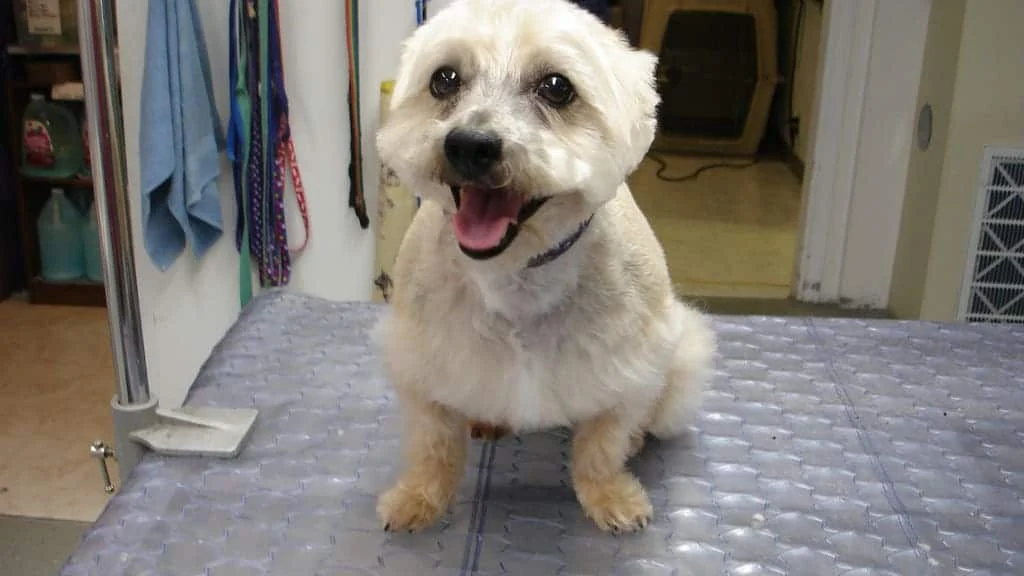
Grooming a dog’s face is mostly careful maintenance: combing facial hair, wiping normal debris away from the eyes, checking the ears and mouth, and arranging professional trimming when hair interferes with vision or comfort. Because eyes, lips, ear leather, and loose skin can be injured in a split second, cosmetic perfection should never be the goal of a home session.
What you need
- Metal comb with both wider and finer spacing
- Soft washcloth or cotton pad moistened with warm water
- Dog-safe facial cleanser only when needed and label-approved
- Nonslip surface and good lighting
- High-value rewards
- Short ball-tip shears or a pet detail trimmer only after professional instruction
Household scissors, pointed craft scissors, human cosmetics, peroxide, essential oils, and unapproved tear-stain products do not belong near a dog’s face.
Step-by-step face grooming
1. Inspect before touching
Look at both eyes, the skin beneath facial hair, nose, lips, ear flaps, and the outside of each ear canal. Compare sides. Pain, heat, odor, sores, swelling, or discharge changes the task from grooming to veterinary assessment.
2. Build calm handling
Practice brief chin holds and touches to the cheeks and ears without tools. Reward stillness, then release. A dog that turns toward your hand, freezes, growls, or struggles is giving useful information: stop rather than restraining harder.
3. Wipe around—not across—the eyes
Use a separate clean, damp pad for each eye and wipe the surrounding hair gently. Do not rub the eyeball. Dried debris can be softened for a moment rather than pulled. Tear staining can be cosmetic, but increased tearing may have a medical cause.
4. Comb facial furnishings
Support the hair near the skin and comb small sections from the ends toward the base. Pay attention beneath the ears, under the chin, and where a collar rubs. Do not cut a mat: facial skin may be hidden inside it.
5. Clean only the visible outer ear
A healthy ear may need only a gentle wipe of the ear flap. Never insert cotton swabs or tools into the canal. Use an ear product only under label or veterinary direction, and dry the outer ear after bathing.
6. Trim only within your training
Hair that touches the eye, traps moisture at the lips, or blocks vision should be handled conservatively. Ask a groomer to demonstrate positioning and tool choice on your dog. Keep blades pointed away from anatomy, close scissors whenever the dog moves, and never trim blind beneath a fold.
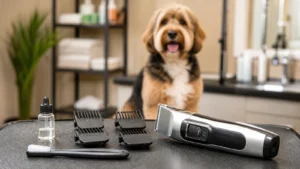
Scissors or a detail trimmer?
| Tool | Appropriate role | Limit |
|---|---|---|
| Metal comb | Separates coat and reveals tangles/skin | Do not force through mats |
| Short ball-tip shears | Small external tidying after instruction | Rounded tips still have sharp cutting edges |
| Pet detail trimmer | Limited cleanup where a groomer has shown safe technique | Can cut folds and heat up |
| Full-size clipper | Usually body work | Bulky housing can block facial visibility |
Read our dog grooming shear safety guide before choosing scissors and our human vs dog clipper comparison before using a household trimmer.
Special considerations
Short-nosed or prominent-eyed dogs
Breeds with large, exposed eyes and short muzzles may be more vulnerable to eye irritation and injury. Keep sessions especially conservative and ask a veterinarian about persistent staining or discharge.
Beards and lip folds
Food and moisture can collect in beards and folds. Comb, wipe, and dry them regularly. Odor, redness, or moist inflamed skin warrants veterinary advice.
Fearful or bite-risk dogs
Pain and fear often appear as avoidance or aggression. Do not place your face close to the dog or improvise restraint. A fear-free groomer or veterinary team can create a safer handling plan.
Common mistakes
- Pointing open scissors toward an eye
- Pulling crusted debris or tangles
- Using one wipe on both eyes
- Pushing swabs into ears
- Using human shampoo or tear-stain chemicals
- Trying to finish while the dog is moving
- Treating redness, odor, or pain as cosmetic
Frequently asked questions
How often should I clean my dog’s face?
Check it daily and clean only as needed. Long facial furnishings and folds may need more frequent gentle wiping and combing. A sudden increase in discharge or odor needs veterinary advice.
Can I cut hair over my dog’s eyes?
Only after a professional demonstrates safe positioning and your dog can remain still. A groomer is the safer choice for close eye work.
Can I use baby wipes?
Use products specifically labeled for dogs and appropriate for the area. Fragrance and other ingredients in human wipes may irritate skin or eyes. Plain warm water on a soft cloth is often sufficient for routine external wiping.
Should I pluck ear hair?
Do not routinely pluck internal ear hair without veterinary guidance. Irritation can worsen ear problems, and infected ears need diagnosis.
Bottom line
Safe face grooming is gentle, short, well-lit, and conservative. Keep the area clean and combed, monitor eyes and ears, and let a trained groomer handle precision cutting. For the complete routine, see how to groom a dog at home.
Sources
- AKC: home dog grooming and hygiene
- AKC: grooming feet, eyes, and ears
- AKC professional dog grooming educational standards
Are there “Sensitive Whiskers” that must be avoided on the mussel?